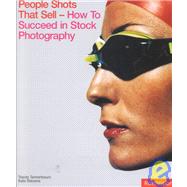
Tuesday, 17 January 2017
The Importance of Effective Keywording
Thursday, 10 February 2011
What Is Freelance Photography?

- stock photography and
- assignment photography

Part-Time Freelance Photography
- to find photography markets that pay the most in an area;
- to find out what specific photography types are in the highest demand;
- to transition to full-time or more focused niche photography; and
- to sell their own photos themselves
- A digital camera

- Internet access
- Know-How
What Is Freelance Photography?

How To Freelance Photography
.- A good thing to know is that the current growth explosion in the photography industry has a positive effect on freelance photography. The current demand worldwide for photos is not being met by current supply. Freelance photographers can profit from that growth.
- Freelance photography is perfect for home-based photographers. In fact, many people are choosing photography as a source of extra income. This is the perfect fit for the work-at-home-moms of the world.
- Knowing what is selling in the market is done through research. Research what is in demand, what are the prices, what is the most lucrative, what are prices, etc.
- Knowing how to shoot quality photos is critical. Again, it’s important to know the standards of the different photography niches. Standards of quality are a given. However, within some specific niches there are varying standards – that benefits the photographer that knows the differences.
- Editing photos ‘know-how’ is very helpful to the freelance photographer. Digital photos often needsome minor editing. (As a side note, digital photo editing is a photography niche that many knowing photographers freelance in.)
- In this digital photography world, knowing how to optimize (make easier to find) web pages, photos,titles, descriptions and keywords will help customers find your photos online.
- Knowing ‘where’ to start saves a tremendous amount of time (and money, sometimes – if you don’t know, you might purchase unnecessary expensive equipment that you don’t need).
- Both provide good ‘how-to’ information on where and how to start. Both also provide very good brief explanationsof the different photography niches. And you will be successful following the steps in both of them. One of them offersmore information about
successfully entering the stock photography market. A consistent source of income for the freelance photographer is selling their existing photos as stock. This one provides information on taking photos and selling them to magazines. The magazines’ guidelines, requests, prices paid, etc. are provided
- The other resource is also very good and very informative. This particular resource offers a 100% guarantee that their freelance photography course will make you money.
Monday, 7 December 2009
Photo subjects that sell
What sort of material is selling best on stock photo sites?
There's no real standout answer to this question - every sale seeems to be totally different to the last!There are some regulars though....
Anything with people in it! These aren't necessarily "portrait" pics - they are more likely to be classed as "lifestyle" images.
People doing things - so it doesn't matter how you currently classify your work, if you can start including a few people you are probably going to improve your sales ability!
Other regular subjects are nature, wildlife, industry, technology, sports and communication, but even these are only part of the picture.
Perhaps the person who can best answer this question is you!
Only you really know the type of work you do; the subjects and styles etc, so you need to do some market research yourself and look for situations where your images could have been used.
Get in the habit of studying the images you see around you every day ... books, magazines, websites, billboards, packaging, junk mail! ... they are all commercial images and they are all selling. Pay particular attention to those subjects that overlap with your current work.
The trick is to then apply what you learn to your own work ... look for the elements within the images that make them work; think about why the buyer would have selected that image, and how you could improve on it.
This is regardless of which stock photo site you choose to sell your work through.
Make this a habit and you'll not only get a better idea of what's currently selling, your own work will become more saleable in the process!
Discover Further Photography Techniques By Reading This Free Digital Photography Report – www.LearnDigitalPhotographyNow.com
Monday, 23 November 2009
Freelance Photography – 3 Ways to Sell Your Photos
If you love photography then a career as a freelance photographer is well worth considering. If you want to start a business in freelance photography there are three main ways to sell your photos.
1. Stock Photography
Stock photography refers to a stock of existing photographs that can be licensed for specific uses. Publishers, magazines, advertising agencies, filmmakers, web designers, and graphic artists are all examples of users of stock photography. They can use stock photography instead of hiring a photographer to shoot the photographs they need.
As a photographer when you take photographs those photos become a part of your “stock”. As the copyright holder you can license the images again and again. Your stock photos can be sold online through stock agencies and microstock sites, or by approaching publishers and other users directly, or you can sell them through your own web site.
2. Photography Products
You can take your photographs and create products for sale. Some examples of possible photography products include posters, prints, postcards, t-shirts and even books.
At CafePress, for example, you can design a wide variety of customizable products using your photos with zero upfront costs and zero inventory investment.
3. Photography Services
Another way to work in freelance photography is sell your skills, to sell your services as a photographer. In this capacity you could work on assignment for portraits, for weddings, or for various types of business project.
If you only want to work part-time at your photography, then working as a freelance photographer is still a great way to earn a little extra cash or to pay for your next digital camera or lens.
About The Author
If you would like to start your own freelance photography business and learn how to sell your photos, please visit http://www.CameraCareer.com
You'll discover all you need to know including which photos to take and how to get the best fees possible for your photos.
Friday, 10 July 2009
Take Photos That Sell
Shoot photos that sell
That's by far the most important point. Would you pay for an image of your neighbors mother-in-law? Or of his dog? Of course not! No one would, perhaps not even your neighbor himself.
Likewise professional photo buyers don't care for that kind of images. What they ...
... are looking for are photos that illustrate concepts, like career, relationship or retirement. Business related photos generally sell very well. Photos of handshakes sell well because shaking hands is a universal, widely understood idea that can be used to illustrate negotiations, contracts, treaties and even things like breaking-up or divorce.
Travel photography can sell well if it can be used to illustrate concepts. For example, a photo of the Houses of Parliament in London can be used to illustrate democracy or governmental topics.
Avoid legal pitfalls
Most stock photography agencies have strict rules regarding images of people (if the people in the photo are recognizable), property (if the image of the property can lead to its owner, e.g. a license plate on a car), and trademarked logos or items anywhere in the image. If in doubt, don't submit such images.
If you want to sell images with recognizable people in them, all agencies will require you to provide a so called "model release". A model release is a document with which the photographed person permits you to sell the image without need of compensation. Obtaining a signed model release from ordinary people is next to impossible, so you might be better off to either weed those images out or hire professional models.
Keywording is the key to success, literally
No matter how good your photos are, they won't sell if no one can find them. All stock sites let you tag or keyword your images. A good approach to keywording is to answer six simple questions for each image: Who? What? Where? When? Why? How?
For example, let's suppose you have a bunch of nice healthcare related images, shot in a hospital. Answering "Who?" you might find "doctor", "nurse", or "patient". Answer "What" to come up with "lancet" or "stethoscope". Answering "Where" yields "hospital", "waiting room" or "theatre", while "When" gives "morning", "afternoon" or any other time of day or year. Ask yourself "Why" to evoke concepts like "sickness", "comfort" or "patience". Finally "How" can refer to the photographic technique involved: It could be "black and white" or "monochrome", it might be "blurred" et cetera.
Keep the noise down
Always keep in mind that the end user of your image may want to print it out eventually. The larger the print size the more noticeable noise will be. Noise is induced by your digital camera's sensor and is something digital photographers have to live with, much like traditional photographers had to live with film grain. Generally speaking the smaller (area wise) the sensor size and the higher the ISO sensitivity the higher the noise will be.
For further info about stock photography, please see my previous post your-digital-camera-is-money-maker, as well as the products below.
P.S. Due to technical 'hitch' my photography store is down at the moment. Will try to sort as soon as possible.
Photo Stock Notes

Friday, 23 January 2009
Your Digital Camera Is A Money Maker!
You know, I had all those photos from a recent trip to Rome, Italy, laying around and I thought it should be possible to make a few bucks off of them. First, I couldn't think of a way to market or sell those images but then I discovered micro stock sites.
Micro stock sites are great: You register (it's free) and then upload a few sample images. After your samples passed an initial review you start uploading and making money.
Let's look how this works in detail:
Stock photography
What is stock photography?
Imagine someone is creating a website about healthcare. To beef it up they want a few images of doctors, nurses, operating theaters and the like. Rather than hiring a photographer (sending him on "assignment" as it's called in the business) which can be very expensive the designer decides to use stock photos, i.e. images that are readily available.
Usually stock images are much cheaper than "bespoke" photos. So our designer would visit one of the established stock image sites and browse around a little until she finds some nice healthcare related imagery. After paying up (usually at the tone of $100 per image or higher depending on the use) she downloads the photos, puts them on the website and calls it a day.
Micro stock sites vs. traditional agencies
With a traditional agency our designer likely spent between $500 and $1,000 for half a dozen images of doctors, nurses and stuff like this. That's small change if you are a Fortune 500 company, but what if you are on a budget or doing website design for a friend or a non-profit organization?
Enter micro stock agencies. Micro stock sites have stirred up the traditional market for stock photography over the last three years. What's the idea here? Rather than charging $100 or more for a photo, on many of those sites you can get high quality images for less than $10, sometimes as low as $1!
With a payout of perhaps 25 to 50 cents per image this is not very attractive for professional photographers but an amateur can make decent money this way and should at least be able to finance her hobby. And remember, this is the Internet we are talking about: Make it up on volume. 25 cents per image downloaded may not sound like much but if you have several hundred or even a thousand decent and usable images, all of them submitted to the big micro stock sites even a paltry 25 cents per download can add up nicely.
What you need
Most micro stock agencies have the same requirements: You'll need at least a four Megapixel camera (more is better, although you'll be fine with between six and eight Megapixels), your images should be free of noise, properly keyworded and should picture sought after subjects. For example, good selling images are business or healthcare related or illustrate a concept or an emotion such as love, relationships, carreer and the like.
Here is a few micro stock agencies that you can try out:
Fotolia - Fotolia is a rising star in the field of stock photography. They usually pay more then 50% of the commission to the photographer, and allow you to set your own price. They are one of the fastest to approve photographs. Another nice thing is the way you can get your money. They will allow you to make a paypal cash-out once you've hit the 2 dollar mark.
Bigstockphoto - Yet another great site to sell images at. They pay 50c or 1$ per image downloaded. and they allow to get paid after only 30$ has accumulated. They will approve photos in about three days. They allow FTP upload.
Shutter Stock - Shutterstock is the leading micro stock agency today. Shutterstock’s business model allows a customer to make a subscription and during the subscription period the customer can buy and download 25 pictures a day. This model encourages downloads, and indeed you will get allot of downloads. The photographers earn 25c per image sell, and additional 5c if the customer also requested to burn the image on a CD. There are also broader uses licenses that the client can buy for additional payment. The site is very friendly. It has an FTP upload option and pictures are approved within a day or two.
Dreams Time - A very popular site with the clients, and will get you great sells. The basic price per image is 1$ (or 2$ for full resolution) out of which the photographer gets 50%. The site is very friendly. It has an FTP upload option and pictures are usually approved within a three days. Defiantly an option if you want to sell your images.
Pixmac - Yet another great site to sell images at. They give you 50% commission for non-exclusive rights and 60% commission for exclusive rights.Earning money has never been easier!
CanStockPhoto -They pay 50% for guest/member download and 0.25 USD for subscription download. They are a great agency, with a little cluttered design.
Feature Pics - A very nice agency - they let you set a price for your stock photos or set the percentage that you want to earn.
Photostockplus - Photostockplus gives a great variety of products you can sell. They will not only sell your photos, but put them on mugs, shirts and more. photostockplus also provides great resources for event photographers.
123rf.com - 123rf is a relatively new agency which is doing well. They are still small, so if you are good standing out is easy. They pay 50% of each sale to the photographer - nice. another nice feature is email notification once your images has been approved or rejected.
Crestock Stock - At Crestock Stock Photos you can earn up to 30% commission on every image or photo you sell. With hundreds of thousands of unique visitors a month, you're guaranteed incredible exposure for your portfolio. Their fast upload system ensures you won't spend ages just to get your photos and images online.
Stockphotomedia - When an image or photo is downloaded, the individual or entity doing so, the User, pays for the image/photo the Photographer has uploaded and the Photographer’s account, the Account Holder, is automatically credited with 35% for small images, 45% for medium images, 55% for large images And 50% for Illustrations of the revenue generated for every photograph and image downloaded. When the balance on an account exceeds 60 EUR or every 3 months, the Account Holder is entitled to submit a request for payment. We use paypal or Moneybookers.
Shutterpoint - ShutterPoint offers THE highest payout rate on the internet: 85% for Full Royalty-Free License, 70% for Standard Royalty-Free License. Payouts are delivered by check, through PayPal, or MoneyBookers whenever your earnings exceed your minimum payment amount. Minimum payment options start at $50. You also get your own image store-front to showcase and sell your photo albums to the world and your own pro-style sub domain (http://USERNAME.shutterpoint.com).
Fotomind - Fotomind is ideal for Stock Photographers and people looking to sell quality stock photos. Good revenue - 0.3$ per credit (that means 0.9$ per image in most cases). Get up to 27$ per image. Upload pictures via FTP or HTTP. Automatic handling of image metadata. Various payment methods (check, paypal, etc). Payouts are sent every month, minimum payout is 100$. Photo review time: up to 72 hours. Earn more money by referring people to FotoMind.com. Fast and Friendly photographer support.
I wish you the best of success!
Krister