

If you've never heard of Chris Page, then here's the skinny.
Like you, he's a photographer. But he's a photographer with a difference.
Because he discovered that he could actually get paid to submit photos online.
So, he eventually quit his job and started to make his living simply taking photos and submitting them online.
He takes pictures of his favorite subjects such as pets, beach, food and travel photography.
And, for some pictures he takes, Chris got paid up to $200 per photo! Sweet!
But Chris didn't stop there, because he saw there were tons of blogs and websites that needed photos - which is where you're set to cash in BIG TIME.
Because he's forged strong links with all these top websites (especially the biggest payers!) and set up a private web site to put these guys in touch with guys like you who are smart enough to know that they can make serious money selling their photos online!
So check this out, right now and take the dollar test drive: photography-jobs.net - you'll be glad you did!
Sincerely.
Krister
P.S. And here's the best bit, you can start making money today with just your camera and laptop. Here's the heads up again: photography-jobs.net
Friday, 28 December 2018


Monday, 3 December 2018
Using Instagram To Market Your Business
Instagram, as a social networking site, has grown rapidly in popularity and is set to continue in that direction.
Given the popularity of visual content online and the fact that it is owned by Facebook has given it a real boost.
Most users of Instagram purely use it for sharing 'moments' of their life or images of things that they're passionate about.
But more and more business owners are seeing it as a great opportunity to gain exposure to their website, products, and/or services.
Indeed, whatever your niche, Instagram enables you to access new marketing avenues for your business.
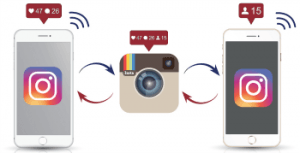
How can You use Instagram to promote your business?
Instagram gives you an up to date channel to gain exposure for you business, engage customers with your brand and introduce special offers or new products to a rapidly growing audience … without a big marketing budget.
This platform enables its users to take pictures and videos, and share them either publicly or privately on the mobile Instagram app, as well as through a variety of other social networking platforms, such as Facebook, Twitter, Tumblr, and Flickr.
An up-to-date online course has been designed to give you a complete introduction to Instagram marketing, teaching easy-to-apply methods to get the most from this platform.
The tutorials in this course will walk you through how to:
* set up your account
* the functionality of the platform
* how to build a following on Instagram
* how to promote yourself and your business properly on this network, using both free and paid methods.
Course Programme :
- What is Instagram & How to Register
- Why Instagram & Key Statistics
- How to Navigate Instagram on Desktop
- How to Navigate Instagram on Mobile
- How to Customise Instagram Profile & What to Include
- How to Post Pictures, Video and Use Hashtags
- Instagram Lingo
- What to Post & How Often
- How To Build A Following
- Instagram for Business
- How To Get More Exposure & Generate Leads
- How to Turn Followers into Website Visitors
- Advertising on Instagram
- Manage Multiple Accounts
- How To Use Instagram ‘Moments ‘
- Pre-scheduling & Analytics Tools
- Case Studies / Instagram Photo Licensing Rules & Resources
About Your Instructor
 Stas Prokofiev, Internet Marketing Consultant
From a young age Stas Prokofiev has always been aspiring to make money from the internet. After trying his hand at many different business types he finally found his passion in Internet Marketing.
Ever since going through the 3-day Internet Marketing Diploma Course, he has gone from strength to strength by mastering the art of building and launching websites. He now works closely with business owners as their Internet Marketing Consultant to create a professional online presence as well as building many start-up sites and projects along the way.
Stas now divides his time between various businesses and working as an internet business school coach sharing his knowledge and experience with others while building a sustainable income from the internet.
Learn How To Market Your Business, Attract New Leads & Increase Sales Using Instagram
Get Started With Instagram Today!
Saturday, 7 October 2017
Great stories start here!
Shutterstock has paid over $500 million to its contributors.
Keep your copyright. License non-exclusively. Earn up to 30% of the sale price of your content.

Tuesday, 17 January 2017
The Importance of Effective Keywording
Uploading your photos on to a photo stock agency is often quite easy...
With a few mouse clicks your photos are available to be bought through that site by brands and creatives. However you have to make sure that your photos don't get lost in the multitude uploaded photos by using correct keywords. Intentional visibility will help your photos get the attention that they need in order to sell.
The biggest misconception about key words is that "more is better". The truth is, however, that less is more when it comes to keywords. You must ensure that every keyword used is relevant to what your image portrays. When choosing keywords, ask yourself: "If I were searching for this kind of photo, what keywords would I use to find it?"
Here is a guide to picking relevant keywords for your images:
Focus on Adjectives, Nouns, and Verbs
What are the main objects or subjects in your photo? What do they look like? What are they doing? The keywords chosen at this stage will help you identify what is present in your photo.
Larger Concepts Portrayed
What does your photo represent beyond the surface level? Buyers very often purchase images in order to portray an idea, a feeling, and a way of life. If you include keywords that tell a story, your photos will be more relevant to buyers.
Location Is Important
Purchasers often look for specific locations (a country, city, or specific site). If you include the photo's location in the keywords it will increase the chances of your photo being found and therefore sold. If you, for example, use the keyword "China" your photo will have to be sifted through perhaps hundreds of images. But if you also add the keyword "Beijing" it may only have to compete with a couple of dozen images. By being location specific in your keywords you make "the net tighter", so to speak, allowing your photo to be more easily found.
Let's use the photo below as an example:

What keywords should be used in line with the guidelines above?
Adjective: barefoot, green, purple, red, dry
Nouns: traveler, nomad, woman, person, rocks, desert, road, route, hat
Verbs: wandering, exploring, walking
Concepts: journey, freedom, time off, wanderlust, leisure, landscape, scenery, travel, solo
Location: United States, America, American state, United States of America, Death Valley, Utah
As a successful photographer you must 'feel' and get into the head of a buyer when shooting, selecting, and keywording your photos. Taking great shots is only the first step. Choosing correct and precise keywords for your photos will drastically increase their visibility. And sales!
Photo credit: Gitte Kama (https://www.snapwi.re/photo/detail/574bf5d8572d110f2b0d3d60)
Wednesday, 14 December 2016

Sunday, 11 December 2016
Photography Tutorials
Check out Serge Ramelli's Youtube channel!
He has over 400 tutorials on photography, he is the number channel on Lightroom worldwide. If you want great tricks and tips photography check him out!


Saturday, 19 March 2016
Great Car Photography - 10 Tips
If you have ever tried to take a great picture a car, you know that it's not as easy as you thought. Although it can be simple enough to take a clear and simple shot of the vehicle, it's far more difficult to capture the design, detail and essence of the car. Here are ten steps which will help you take greater shots of cars.
To begin with
There is a lot of things involved in car photography, so much so that there are entire websites and books dedicated to it. We won't cover everything here, but hopefully this will give you an insight into the world of car photography and get you started with the basics.
To begin, you'll need a car! Any car will do really, but your work will look more professional and exciting if you're working with more interesting vehicles. If all you've got is your everyday Fiat, that is fine. But if your mate has a Lambo, you'd better buy him a couple of drinks and ask nicely if you can borrow it for the day!

Location
So you've got your car, now you need a location. You don't see many car adverts in which the car isn't set within an amazing location and bathed with the warm sun in the distance. Most likely you will be shooting on a budget so it will be hard to match the shoots you see in glossy magazines. Still, there are plenty of options to choose from.
You need to make sure that the car is the centre of attention - you don't want your location to steal away attention from the car. You want it to the car look better. Decide, therefore, whether you want to shoot the car in a natural setting, somewhere more unusual or whether you want a more studio feel to it.

A Natural Setting
In a natural setting, you could have the car either on the road, in a car park, or on the drive. These settings wont necessarily add much to your shot though. Imagine what sort of feel you'd like for your shots. Do you want a gritty and moody feel? Then perhaps head to the top level of a multi-storey car park with views across the city, or to the industrial estates with perhaps some derelict warehouses. Do you want a clean and classy image? Then head to the business district of the city with all the the reflective glass of the office blocks and modern buildings.
As an alternative, you could go for the more classic shot, at the top of a hill with an open vista overlooking the landscape, preferably with the sun setting in the background. Finding a great location will make your photograph stand out more. Try hard to find somewhere that will really enhance the atmosphere of the shot and the features of the car.

An Unnatural Setting
If you'd rather try an unnatural setting for the car, think whether you'll make the car look alien in it's surroundings. For example, a car doesn't look very mush at home even when shot parked on grass. Still, you'd want to avoid cliché car shots. At the same time don't be overly ambitious and end up having a series of shots that take the car too far out of context.
Possibly the best option is to go for a studio-type shoot. Hiring out a studio large enough can be very expensive though, so explore the alternatives first. If you know someone with a large garage with white walls it may be the perfect alternative. The greatest advantage of using a studio is the opportunity to light the subject creatively. (More on that later.) This can give you the chance to get some great interior and detail shots, but full body shots can end up looking fairly cold and bland.
Finally, when considering your location, think carefully about how the surroundings relate to the colour of your car and whether the tones in the shot compliment each other.

Lighting
Next comes the matter of lighting - the essential element of every photo shoot! Natural light is always best. The golden hours, just before and during sunrise in the morning and through sunset in the evening would be most recommended. That way, you'll get a lovely warm side wash of sunlight on the car and you can avoid the overtly harsh brightness of the midday sun, which will also cause problems with reflections.
There is also the option of using artificial lighting. There are many ways to light a car for a shoot. The best thing is to set up lights or flashguns one by one, highlighting aspects or angles of the vehicle as you see fit. Then, take a few test shots, ensuring that the lighting setup is just where you want it. This way you wont light the car excessively and you can avoid letting the light sources double up on parts of the car. Use your eyes and take your time, the lighting is a very individual preference and can define the personal style and mood of the shot depending on you.

Angles
Having now set your car up in a great location and figured out the lighting it's time to actually start taking pictures! It's important to think about how you want to portray the car, whether there are any particular features that you want to highlight.
Shooting from eye level, even when done technically correct, can make the car look boring. So to make your shots stand out you'll need to use different angles and vantage points. An interesting point is to shoot from just above the ground. This gives the car an overbearingly menacing look! Experiment and see what works for you and your car. (More tips can be found here.)
Once you've decided which angles work best and show the car in the way that you want, try moving the car to varied positions to get it to work well in the setting. Make sure you avoid distractions behind the car such as trees and telegraph poles / cables. Depending on the angles you've chosen, for full body shots, using a tripod is recommended for extra sharpness. However, for those wonderful angles, you'll need to go handheld...

Exterior Details
Once you've taken the full body shots, you can start thinking about any exterior detail shots that might want to highlight. Take a good look around and try to capture any details such as bodywork shapes and lines, logo badges, wheel rims and grills. Here too, it's important to consider the lighting and angles - don't presume that your previous set up will work the same for the various detail shots.

Interior
Don't forget that there are many interesting interior details worth shooting too. The manufacturers logo, for example, will appear many times within the car's interior. There will likely also be a few nice design features that may be worth capturing. Make sure there is enough light available, especially if you're on location during the evening. You may want to actually take the interior shots first while its still bright, as it would be a shame to miss out on the details. Obviously, if you're in a studio the order of things doesn't really matter.

Panning
Panning is a technique that is utilised in the world of motorsport photography, but also a fair amount in promotional car photography. The aim is to capture the car in motion, as it hurtles at speed either around a racetrack or some stunning mountainous road. This creates an effect where the car is in focus whilst the background is blurred, indicating motion.
The simplest way of using this technique is from a handheld point and requires you to turn and move in line with the moving car whilst taking your shot. It's important to know the expected movement of the car before you start shooting and as you move around in line with the subject. This is actually not that difficult! It just takes a little practise to get right.
Another panning technique is to shoot the car from another moving vehicle. If both are moving at same speed, you won't need to move the camera, achieving still a similar effect as stationary panning. However, be careful when sticking your camera out the window of a car. It is perhaps best to start with the basics first before you consider the dual car shoot!

Have a go!
Hopefully these suggestions and tips will get you started and give you grounding for taking some great shots of the cars you admire. As mentioned earlier, don't expect to be matching the high quality of the car manufacturer's advertisements straight away, but they're great for inspiration and ideas. There are so many beautiful cars, both modern and old, just waiting to be 'immortalised', so get out there and have a go!


Subscribe to:
Posts (Atom)


